

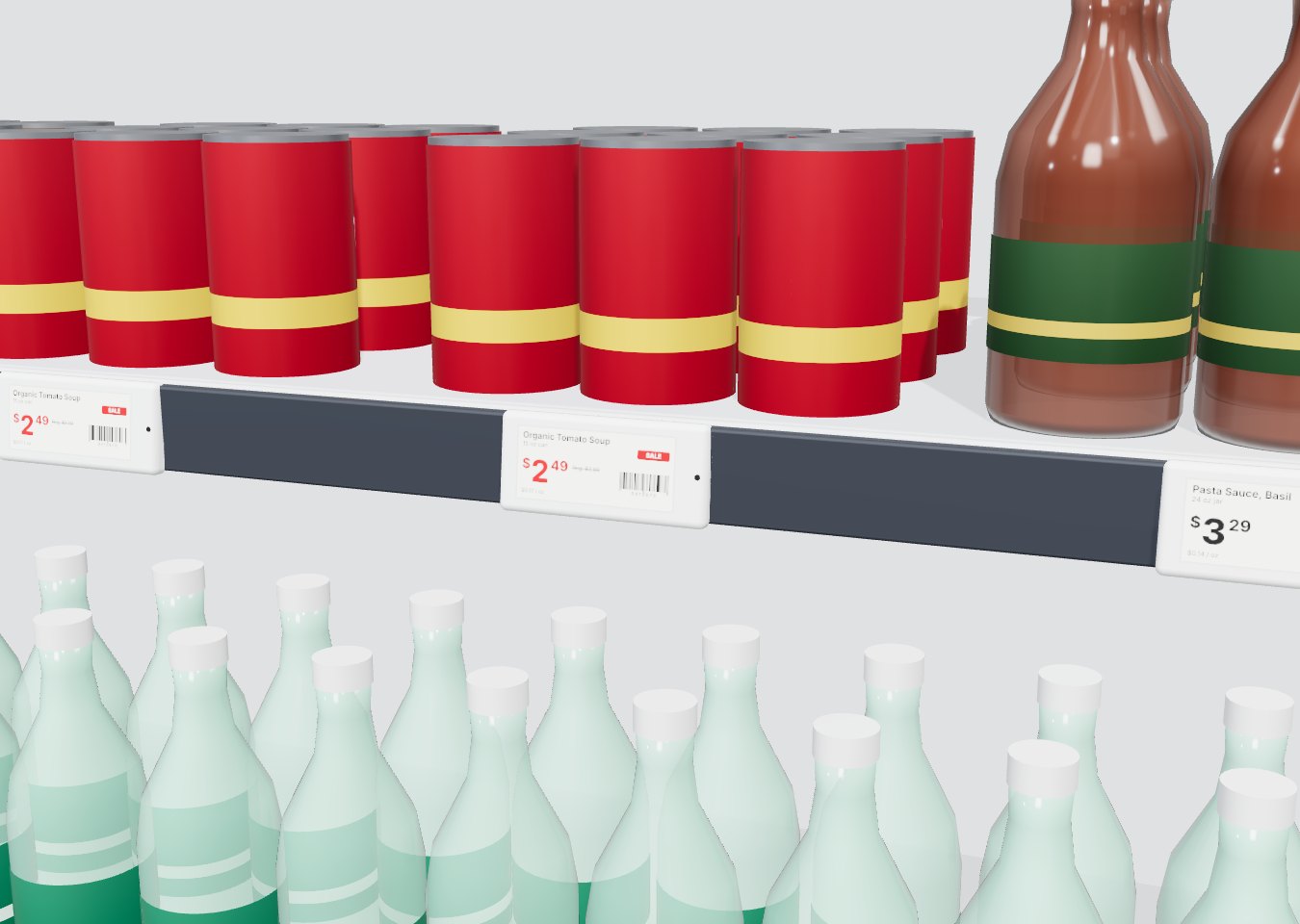

Electronic shelf labels (ESLs) look like a small upgrade: a digital price tag instead of a paper one. But a store’s price tags touch more of the business than most owners realize. Every price change, promotion, markdown and reset depends on them. That’s why ESLs can pay for themselves, and why the payback looks different in every store.
This post walks through where the value comes from and how to estimate it with your own numbers, without relying on someone else’s averages.
First, what an ESL is
An ESL is a small, battery-powered display, usually e-paper, that mounts where the paper tag used to be. It shows the price, product name, unit price and often a barcode. Updates arrive wirelessly from the store’s system through a base station. E-paper looks like print, is easy to read from an angle, and only uses power when the image changes.
Payback source 1: Labor
Think about what a single price change involves with paper: someone changes the price in the system, prints a tag, cuts it, finds the shelf, removes the old tag, puts up the new one, and (ideally) double-checks it. Multiply that by every change in a week: vendor cost updates, weekly specials, markdowns, seasonal resets.
With ESLs, the change happens in the back office and is pushed to the shelf. Staff don’t stop doing tag work altogether (new items still need a tag bound to them), but the routine weekly reprinting goes away. Those hours go back to stocking, ordering and helping customers.
How to estimate it: for one normal week, track how many tags your team changes and roughly how long each takes. Multiply by your hourly labor cost. That’s your weekly tag labor, before counting the time spent fixing mistakes.
Payback source 2: Price accuracy
When the shelf and the register disagree, the store loses either way. If the shelf is lower, many stores honor it and lose margin. If the shelf is higher, customers feel overcharged and trust takes a hit. In some places, pricing errors can also draw attention from local weights-and-measures inspectors.
ESLs connected to the same price record as the register remove most of the gap. The price is changed once and both the register and the tag read it. Logs show which tags received the update, so a manager can check instead of walking the aisle.
Payback source 3: Promotions and markdowns
Paper makes promotions expensive to run. Every sale means two rounds of tag changes: one to start it, one to end it. That cost quietly discourages stores from running as many promotions as they’d like, or from reacting quickly to a competitor or a short-dated product.
With ESLs, switching a tag to a sale layout (a red price and a “Reg.” price, for example) and back again is a system task, not a store walk. That makes short promotions and quick markdowns on perishables practical.
Payback source 4: Finding things faster
Many ESLs include a small LED. AIR Slim tags have a red, green or blue LED that can flash on command. That sounds minor until you think about restocking, order picking for delivery, or a price check in a long aisle. Flashing the right tag saves walking and searching.
Payback source 5: Less waste
Paper tags, labels, printer supplies and the time spent printing add up week after week. ESLs remove most of that ongoing paper use. It’s rarely the biggest number in the calculation, but it’s real and it never stops.
What it costs, honestly
To be fair, the cost side has several parts:
- Tags: priced by size and quantity. Most stores use mostly small shelf-edge tags with a few larger ones for coolers, produce and feature spots.
- Mounts: clamps, rails, hooks, stands and cases for each fixture type.
- Base stations: to cover the sales floor.
- Software and setup: label layouts, product binding and staff training.
- Batteries over time: AIR Slim tags use replaceable CR2450 coin cells. How long they last depends mainly on how often each tag updates.
A simple way to estimate payback
- Weekly tag labor: tags changed per week × minutes per tag × hourly cost.
- Error cost: an honest estimate of margin lost to shelf-price errors, plus time spent fixing them.
- Promotion upside: what you could gain by running promotions you skip today because of tag work (be conservative).
- Supplies: paper, labels and printer costs per year.
- Divide the total project cost by the yearly savings to get a rough payback period.
Our ESL ROI calculator does this math with your inputs. Treat the result as an estimate, not a promise. Every store’s mix of items, fixtures and price-change frequency is different.
Where stores see payback fastest
- Stores that change many prices every week, such as grocery, convenience and specialty food.
- Stores with frequent promotions or perishable markdowns.
- Multi-store operators who want the same price on every shelf at once.
- Stores where shelf-price errors have already caused complaints.
Start with a pilot
You don’t have to convert the whole store at once. A pilot aisle or department lets your team learn the routine (change, preview, push, check) and gives you real numbers from your own store. Then you can roll out with confidence.
AIR ESL runs on the same back office as AIR POS and AIR ERP, so the shelf and the register always start from the same price. Get an ESL quote or see the full ESL lineup.
